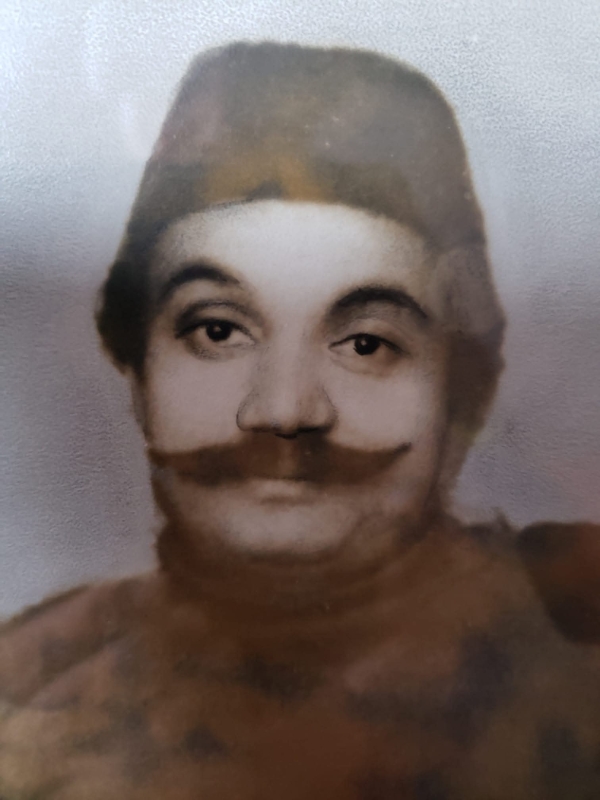

Present Head
- Kunwar Padmanabh Shah
History
Introduction to Makrai State
The Princely State of Makrai was a historic sovereign entity located in the Narmada valley region of Central India. Situated amidst the dense forests and hilly terrains of the Satpura Range, it now forms a part of the Harda district in the state of Madhya Pradesh. Unlike the majority of its larger neighbors, Makrai was notable for being one of the few princely states in the Central Provinces ruled by a dynasty of Rajgond (royal Gond) origin, preserving a unique cultural and political synthesis of tribal heritage and classical Indian kingship.
Origin and Foundation
The state of Makrai was founded in 1663 by Raja Makar Shah, a noble belonging to the Rajgond clan. The Rajgonds were Gonds who had adopted Rajput social codes, military traditions, and political structures to establish their hegemony over several tracts of Central India. Raja Makar Shah established his capital at Makrai, constructing a fortified seat of power that served as the administrative and military nucleus of the state. Under his leadership, the state consolidated its authority over the surrounding hilly forest tracts and fertile riverine pockets, managing to preserve its autonomy amidst the shifting geopolitical landscapes of regional sultanates and Gond kingdoms.
The Maratha Period and Territorial Contraction
During the 18th century, the expansion of the Maratha Empire under the Peshwas and the Bhonsle Maharajas of Nagpur significantly altered the fortunes of Makrai. The state was subjected to aggressive incursions by Maratha forces, which seized vast stretches of its fertile lowland territories. The Gond rulers of Makrai were forced to cede these highly productive agricultural plains and pay tribute (tanka) to the Marathas to ensure their survival. Despite these immense territorial and financial losses, the Rajas of Makrai successfully retreated into their rugged, heavily forested Satpura strongholds, maintaining a de facto independence from direct Maratha administrative control.
The British Raj and Administrative Consolidation
Following the defeat of the Maratha Confederacy in the Third Anglo-Maratha War (1817–1818), the British East India Company assumed paramountcy over Central India. In 1818, Makrai entered into treaty relations with the British, transitioning into a British protectorate. The state was placed under the political supervision of the Nerbudda (Narmada) Division of the Central Provinces.
Under British protection, the boundaries of Makrai were stabilized, and the state was recognized as a feudatory chiefship. The British administration formalised the succession of the Gond rulers, granting them the hereditary title of Raja. During this period, the state benefited from a protracted era of peace, free from the external raids that had characterized the preceding century.
Prominent Rulers and Social Reformers
The late 19th and early 20th centuries saw several progressive rulers ascend the gadi (throne) of Makrai, who worked to modernize the state's infrastructure, economy, and administration:
- Raja Devi Shah (died ): A traditionalist ruler who focused on maintaining internal stability and preserving the cultural heritage of the Gond community during the transitional years of the mid-19th century.
- Raja Lallu Sah (alias Bharat Shah): Ascended the throne in the late 19th century. He initiated the formalization of land revenue systems and promoted local agricultural development.
- Raja Chhatrasal Shah (succeeded 1911): One of the most forward-thinking rulers of Makrai. He introduced modern education by establishing state-funded schools, constructed roads to improve connectivity with the neighbouring British districts of Hoshangabad and Harda, and reformed the judicial administration. He was also highly regarded for his systematic and sustainable management of the state's rich timber and forest resources.
Post-Independence and the Modern Era
Following India's independence from British rule in August 1947, the last ruling chief of Makrai, Raja Mahendra Chandra Shah, signed the Instrument of Accession to the Dominion of India on January 1, 1948. The state was subsequently merged into the Central Provinces and Berar, which later became the state of Madhya Pradesh under the States Reorganisation Act of 1956.
Today, the historical territory of Makrai is integrated into the Harda district of Madhya Pradesh. The ruins of the historic Makrai Fort stand as a silent testament to the state's Rajgond heritage, attracting historians and tourists interested in the tribal kingdoms of Central India.
References and Historical Sources
- For details on the geography and administrative history of Makrai under the British Raj, see the Imperial Gazetteer of India, Volume 17, page 43 on the Digital South Asia Library.
- To understand the historical context of the Gond dynasties in the Central Provinces, refer to The Tribes and Castes of the Central Provinces of India by R.V. Russell available on the Internet Archive.
- For general historical records on princely states' integration, consult the Library of Congress catalogs.
Genealogy
- Raja KARKAT RAI, founder Raja of Makrai 939/-, independent Kingdom of Makrai (Hosangabad) married the daughter of Garha Mandla King.
- Raja BHOJ SHAH, Raja of Makrai
- Raja RATAN SHAH, Raja of Makrai
- Raja KESARI SHAH, Raja of Makrai
- Raja LAL SHAH, Raja of Makrai
- Raja CHATRA SHAH, Raja of Makrai
- Raja JOT SHAH, Raja of Makrai
- Raja BIR SHAH, Raja of Makrai
- Raja BHARAT SHAH, Raja of Makrai
- Raja BHOPAT SHAH, Raja of Makrai
- Raja DURGA SHAH, Raja of Makrai
- Raja BHOJ SHAH, Raja of Makrai
- Raja TEJ SHAH, Raja of Makrai
- Raja GOPAL SHAH, Raja of Makrai
- Raja RAM SHAH, Raja of Makrai
- Raja GUMAN SHAH, Raja of Makrai
- Raja KOK SHAH, Raja of Makrai
- Raja NAWAL SHAH, Raja of Makrai
- Raja KALADOND SHAH, Raja of Makrai
- Raja PILADOND SHAH, Raja of Makrai
- Raja KALIA PAHAR SHAH, Raja of Makrai, might have been the one referred in conquering Devgargh and Gangpur
- Raja BAKAR SHAH, Raja of Makrai
- Raja SANDWA SHAH, Raja of Makrai
- Raja MOOJEE SHAH, Raja of Makrai
- Raja KHONDJEE SHAH, Raja of Makrai
- Raja GANJEE SHAH, Raja of Makrai
- Raja BHIMJEE SHAH, Raja of Makrai
- RAJA HATTAY RAI, Raja of Makrai, had Seven sons Each founded their own kingdom
- Raja Pratap Shah (qv)
- Rajkumar Ramji Shah Saoligorgh (Chanda Distt.) Maharashtra
- Gurbaijee Shah Gunargargh.
- Barjori Shah (Gorgh not know)
- Jughar Shah Fatehpur Hosangabad
- Thakur Sham Chand Singh, Raja of Mukutpur Pratapgarh Pargana (now Pandaria Zamindari). He was the Commander of Garha Mandla. He won many battles with his military skills, for which he was granted the Mukutpur Pratapgarh Pargana by the Maharaja of Garha Mandla. Later, his descendants ruled not only the Pandaria Zamindari Estate, but also the Kawardha State and the Sahaspur Lohara Zamindari Estate.
- Raja PRATAP SHAH, Raja of Makrai.
- Raja MAKRAND SHAH, Raja of Makrai 1663/-
- ....
- Raja FATEH SHAH, Raja of Makrai, married Rani Birj Kune (qv).
- Rani Birj Kune, Rani of Makrai 1749/-
- Raja DHAR SHAH, Raja of Makrai
- Raja BHARAT SHAH, Raja of Makrai 1765/-
- Raja UDAI SHAH, Raja of Makrai
- ......
- ......
- Raja DEVI SHAH Hathriya Rai, Raja of Makrai 1832/1866, married and had adoptive issue.
- Raja Lacchu Shah Hathriya Rai [aka Bharat Shah] (qv)
- Raja LACCHU SHAH Hathriya Rai, Raja of Makrai 1866/1911, born , succeeded 5th December 1866.
- Raja CHHATRASAL SHAH Hathriya Rai, Raja of Makrai 1911/1918
- Raja DRIGPAL SHAH Hathriya Rai, Raja of Makrai 1918/1929 , born and succeeded 30th October 1918.
- Raja Sahib TODAR SHAH Hathriya Rai, Raja of Makrai 1929/-, married to Rani Uma Kuwar Devi and had issue, he died .
- Yuvaraj Devi Shah, married Yuvarani Sita Rana [now Rajmata Sita Rani Devi of Makrai], daughter of Shri Thir Jung Rana of Nepal, and his wife, Rani Saheb Padma Kumari, and has issue.
- Raja Ajay Kumar Shah (qv)
- Kuwar Vijay Shah, born 1 Novembar 1962, He is a highly influential and diplomatic leader of the Bharatiya Janata Party (BJP) in Madhya Pradesh politics, establishing the legacy of the Makdai royal family in democratic politics. He began his political career with the Akhil Bharatiya Vidyarthi Parishad (ABVP) and was elected MLA for the first time in 1990 from the Harsud assembly seat in Khandwa district at the age of 28. He has subsequently won this seat for eight consecutive terms (1993, 1998, 2003, 2008, 2013, 2018, and 2023), a rare record in Madhya Pradesh parliamentary history. His strong influence and outspoken style have led him to serve as a cabinet minister seven times in the governments of Uma Bharti, Babulal Gaur, Shivraj Singh Chouhan, and the current Dr. Mohan Yadav, effectively managing crucial departments such as school education, forests, culture, tourism, and tribal affairs, married Kunwarani Bhawna Shah Daughter of Kok Singh of Bagli Jagir, District Dewas, Madhya Pradesh She was the Mayor of Khandwa Municipal Corporation from 2011 to 2015 and had issue.
- Kunwar Divyaditya Shah, District Panchayat Vice President of Khandwa, Madhya Pradesh from Bharatiya Janata Party since 2022.
- Kuwar Dhananjay Shah, Additional Superintendent of Police in Madhya Pradesh and married Kunwarani Priti Chakrawarti of Tikamgarh, Madhya Pradesh and had issue.
- Kunwar Apritam Shah
- Kumari Advitiya Shah
- Kuwar Sanjay Shah, served as the BJP MLA from the Timarni Assembly constituency for three consecutive terms (2008, 2013, and 2018), married to Kunwarani Shailja of Bardibas, Mahottari, Nepal and had issue.
- Kumari Raima Shah
- Kunwar Raibhaya Shah
- Kumari Kiran Shah, married to late Additional Commissioner Mahipal Singh of Bendi, Anuppur and had issue.
- Sukriti Singh
- Rudra Pratap Singh
- Narmada Pratap Singh
- Kumari Uma Shah, married to Dr. Krishna Hamal of Pipal Bhanjyang, Udaypur district of Nepal, currently residing in Canberra, Australia, and had issue.
- Natasha
- Abhilasha
- Kumari Purnima Singh, married to Yogendra Singh of Dhamkan Jagir, Muraina district, Madhya Pradesh, and had issue.
- Yuvraj Singh
- Dushyant Singh
- Kumari Archana Shah, married to Naresh Thapa of Chandanpur, Sankhuwa Sabha district of Nepal, currently residing in Canberra, Australia and had issue.
- Asmita
- Kunwar Bharat Shah
- Kunwar Vikram Kesri Shah
- Yuvaraj Devi Shah, married Yuvarani Sita Rana [now Rajmata Sita Rani Devi of Makrai], daughter of Shri Thir Jung Rana of Nepal, and his wife, Rani Saheb Padma Kumari, and has issue.
- Raja Sahib AJAY KUMAR SHAH, Raja of Makrai, married to Hemlata Kushwaha of Harsi and had issues.
- Kunwar Abhijeet Shah (qv)
- Kunwar Rahul Shah
- Raja Sahib ABHIJEET SHAH, Raja of Makrai (see above)